

FORECLOSURES ARE UP 20%. THAT IS NOT A CRASH.
Our Blog
A video from real estate commentator Tuong Pham is making the rounds this week, and it leads with a number designed to scare you: foreclosures are up 20%. His point, and it is the right one, is that home prices are still rising at the same time. Those two things together do not add up to a crash.
Here is what the foreclosure number actually says. ATTOM, which tracks filings nationally, counted about 227,500 properties with a foreclosure filing in the first half of 2026, up roughly 21% from the same period last year. Foreclosure starts are up about 20%, and completed foreclosures are up more than that. Those are real increases, and for the families inside those numbers, they matter.
But ATTOM's own CEO, Rob Barber, describes the pattern as pockets of financial stress rather than broad distress, and notes that overall foreclosure activity remains below pre-pandemic norms. We are climbing back toward normal from the artificially quiet pandemic years, when forbearance programs kept filings near zero. A 20% rise from a historic low is a very different story than a 20% rise from a normal baseline.
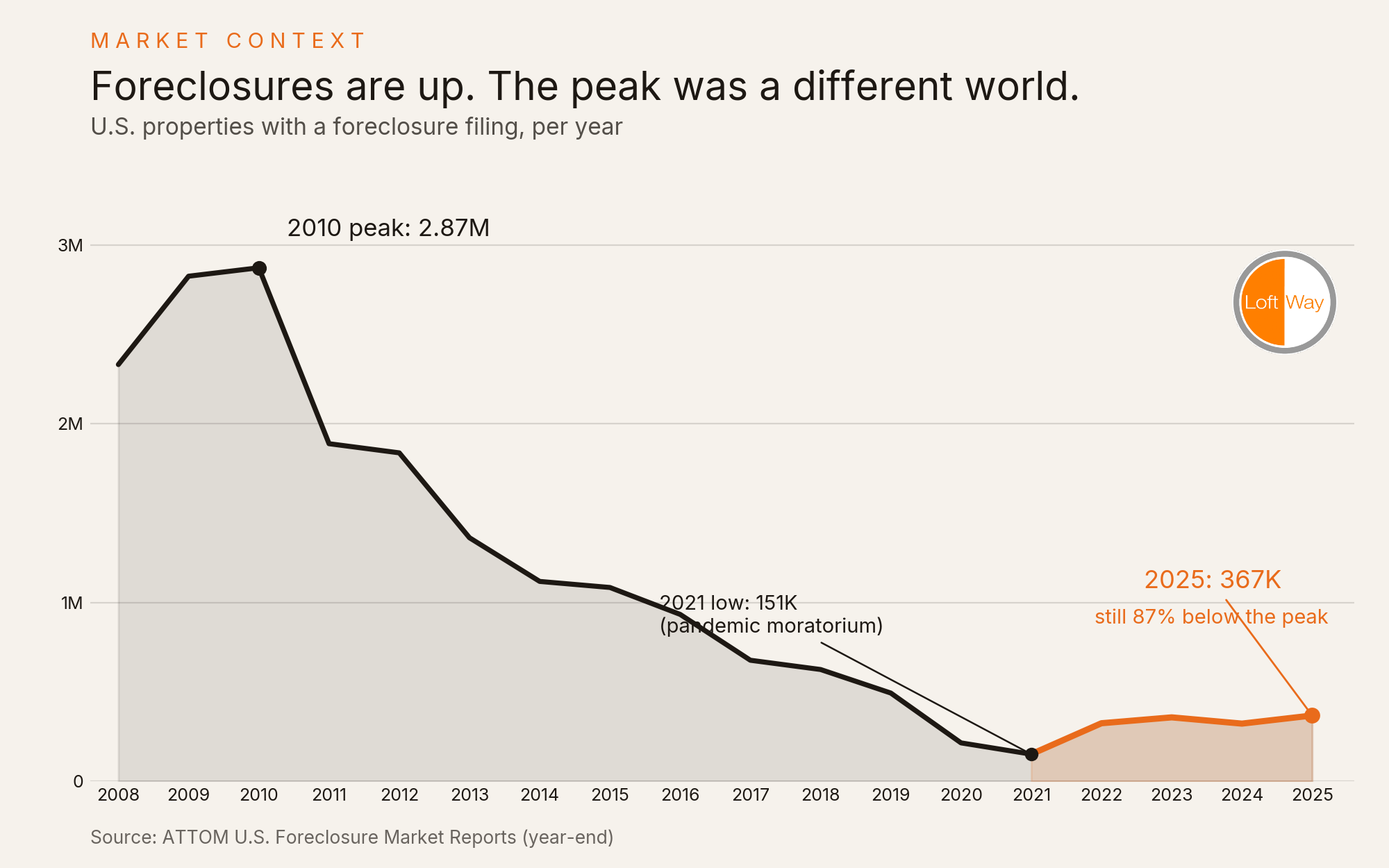
A crash needs ingredients this market does not have. In 2008, millions of owners owed more than their homes were worth, so falling behind meant a forced sale or a bank sale at any price. Today, ATTOM reports that about 41% of mortgaged homes are equity rich, meaning the owner owes half or less of what the home is worth, and only about 3% are seriously underwater. An owner with equity who falls behind can sell, keep their equity, and move on. That is a listing, not a foreclosure wave, and it is one reason prices keep holding while filings rise.
What does this mean if you own or want to own a loft in downtown Los Angeles? Downtown has always run on its own cycle, and the fundamentals here have not changed with this headline. Well priced lofts are still selling. Owners are sitting on equity. Buyers who have been waiting for a collapse to hand them a bargain are still waiting, because the conditions that cause collapses are not present.
The honest read: the market is not crashing. It is normalizing, with real stress at the edges for owners whose taxes, insurance, and living costs have outrun their income. If you are thinking about buying or selling, the numbers favor a clear eyed conversation over a scary headline. That is a conversation we are happy to have.