
OIL PRICES IMPACT REAL ESTATE MARKET
Our Blog
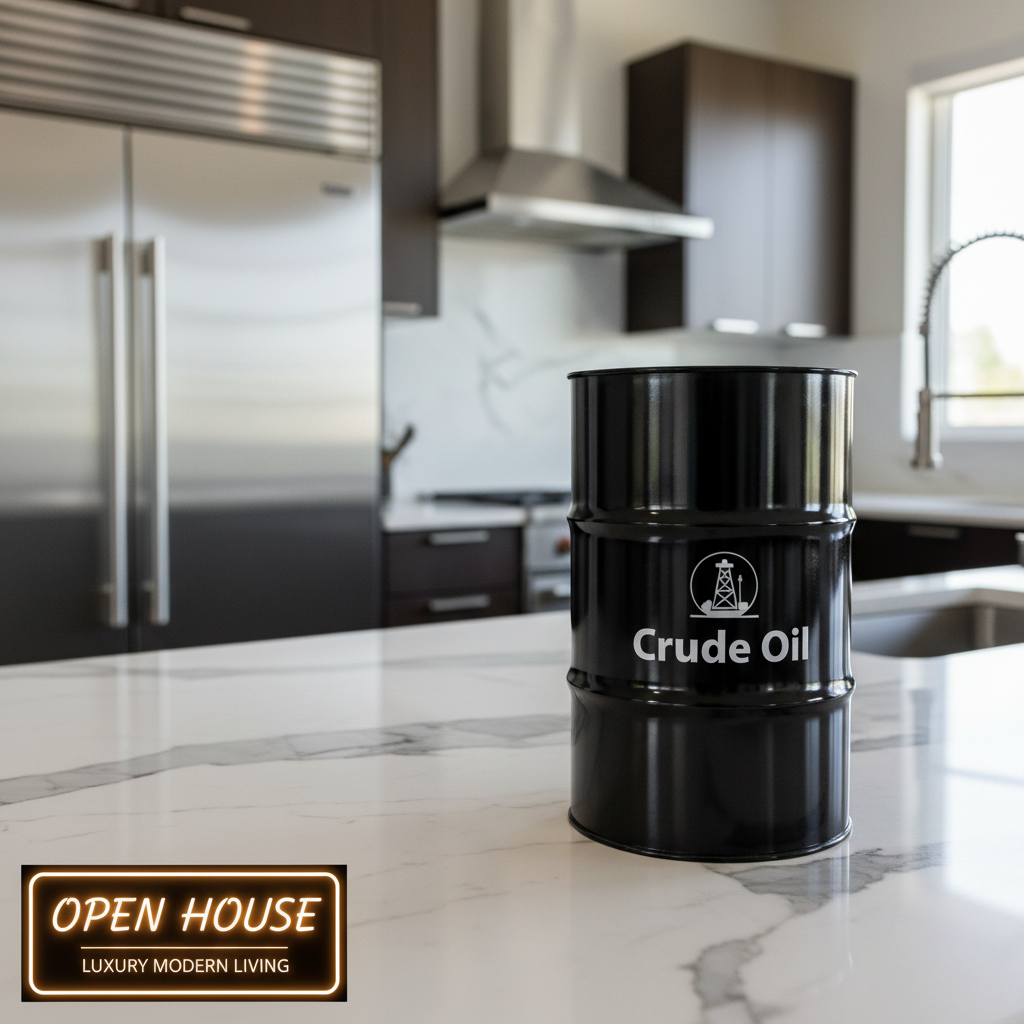
Let’s be honest: most people don’t think about a barrel of crude oil when they’re walking through an open house. We’re usually looking at the kitchen backsplash or checking the water pressure. But if you’ve been watching the news lately, you know that what happens at the pump eventually hits you where you live—literally.
Here’s the “non-economist” breakdown of how oil prices actually mess with the real estate market.
1. It’s the “Silent Tax” on Your Budget
When oil prices go up, everything gets more expensive. It’s not just the $75 fill-up for your car; it’s the fact that the grocery store had to pay more to get the milk there, and the local coffee shop is paying more for deliveries.
When your “cost of living” jumps by a few hundred bucks a month because of energy costs, that’s money that isn’t going toward a mortgage payment. It thins out the pool of buyers because people start feeling squeezed and opt to stay put rather than upgrade.
2. The “Drive Until You Qualify” Trap
In cities like LA, we have a habit of moving further out into the suburbs to find a house we can actually afford. Real estate agents call it “driving until you qualify.”
But when gas prices spike, that 40-mile commute from a more “affordable” neighborhood starts to look like a nightmare. If you’re spending $600 a month just on gas, that “cheap” suburban house isn’t so cheap anymore. We usually see a shift where homes in walkable neighborhoods or near light rail start to see way more demand, while the far-flung suburbs start to cool off.
3. Construction Costs (Or why your renovation just got quoted higher)
If you’re building a house or even just doing a kitchen remodel, oil is everywhere.
-
The Materials: Shingles, PVC pipes, paint, and even some types of flooring are petroleum-based.
-
The Shipping: Those cabinets don’t fly to your house; they come on a heavy truck that runs on diesel.
When oil is high, contractors have to raise their prices just to keep their margins. This pushes the price of new construction up, which in turn keeps the prices of “used” homes high because there’s less new inventory to compete with.
4. The Mortgage Rate Rollercoaster
This is the big one. High oil prices fuel inflation. When the government sees inflation getting out of hand, they usually keep interest rates higher to cool things down.
We saw this play out recently: oil pushed toward $100 a barrel, and suddenly those 5.8% mortgage rates we were hoping for jumped back up over 6.4%. It’s a chain reaction that starts at an oil rig and ends with your monthly bank statement.
The Cheat Sheet
-
High Oil Prices: Bad for buyers (higher rates), bad for builders (expensive materials), and bad for the suburbs (commute costs).
-
Low Oil Prices: Good for consumer confidence, stabilizes building costs, and makes that house with the big yard and the long commute look like a total steal.
The Takeaway
You don’t need to be a day-trader to understand this. Just look at the sign at your local gas station. If those numbers are climbing, expect the housing market to get a little “stickier” and more expensive across the board.
