
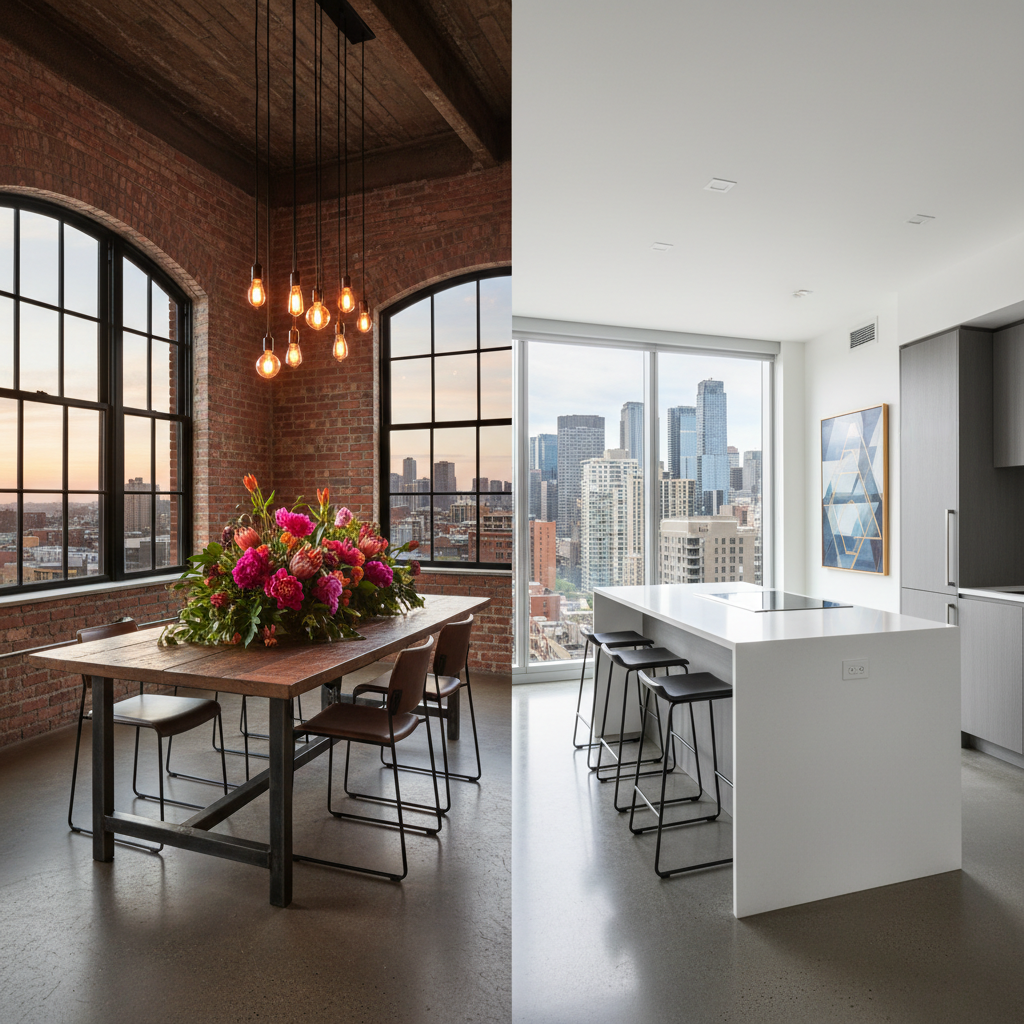
LOFT VS CONDO IN LOS ANGELES: COMPLETE COMPARISON
Our Blog
When buyers start looking in Downtown Los Angeles, one of the first questions that comes up is: what’s the real difference between a loft and a condo? The terms are often used interchangeably, but they actually describe very different living experiences.
At its core, a condo refers to a type of ownership. You own the interior of your unit and share ownership of the common areas like hallways, amenities, and the exterior structure through a homeowners association. Condos can come in many architectural styles — modern mid-rise buildings, high-rise towers, or even townhouse-style developments. The layout is typically more traditional, with defined bedrooms, enclosed rooms, and standard ceiling heights. Buildings like Metropolis Los Angeles or Ten50 are great examples of contemporary condo living in DTLA, offering luxury finishes, resort-style amenities, and a more conventional floor plan.
A loft, on the other hand, describes a style of space. Lofts are known for their open floor plans, high ceilings, large industrial windows, exposed brick, concrete floors, and visible ductwork. Many original lofts were converted from old commercial or industrial buildings. In Downtown LA, iconic buildings like The Rowan Lofts and Higgins Building showcase that authentic warehouse aesthetic — high ceilings, oversized windows, and open layouts that allow for flexible living and creative design.
Here’s where it gets interesting: a loft can legally be a condo. In fact, many lofts in DTLA are condominium units inside converted historic buildings. So “condo” describes how you own it, while “loft” describes how it looks and feels.
From a lifestyle perspective, condos tend to appeal to buyers who prefer privacy and clearly separated rooms. They often come with strong amenity packages — pools, gyms, rooftop lounges, concierge services — and feel more like vertical suburban living. Lofts, on the other hand, attract creatives, entrepreneurs, and buyers who love character and flexibility. The open layout allows you to design your own bedroom areas, offices, or entertainment spaces without being boxed into predefined rooms.
Another key difference is light and volume. Lofts usually have higher ceilings and larger windows, creating a dramatic sense of space. Condos often feel more polished and refined, while lofts feel raw, architectural, and expressive.
In the end, the choice comes down to personality and lifestyle. If you love clean lines, resort-style amenities, and traditional layouts, a condo may be the better fit. If you’re drawn to exposed brick, soaring ceilings, and that true Downtown LA character, a loft might feel more like home.
In a market like DTLA — where historic conversions sit just blocks away from modern glass towers — you don’t have to choose one neighborhood over the other. You just have to choose the vibe that matches you.